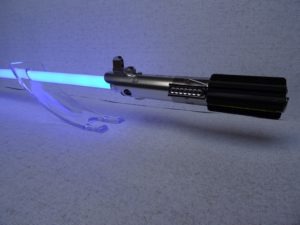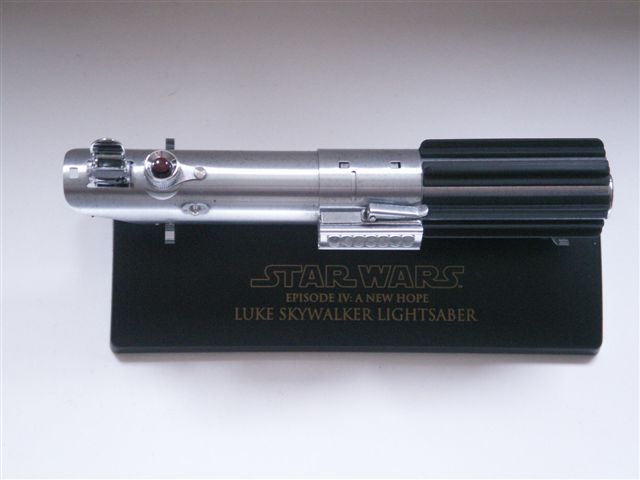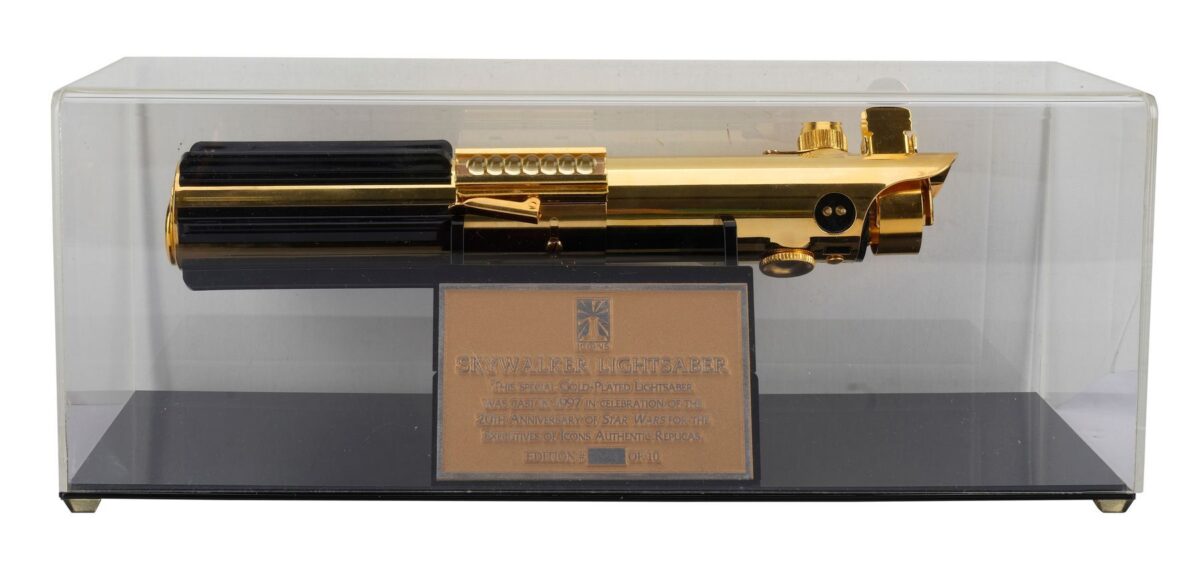
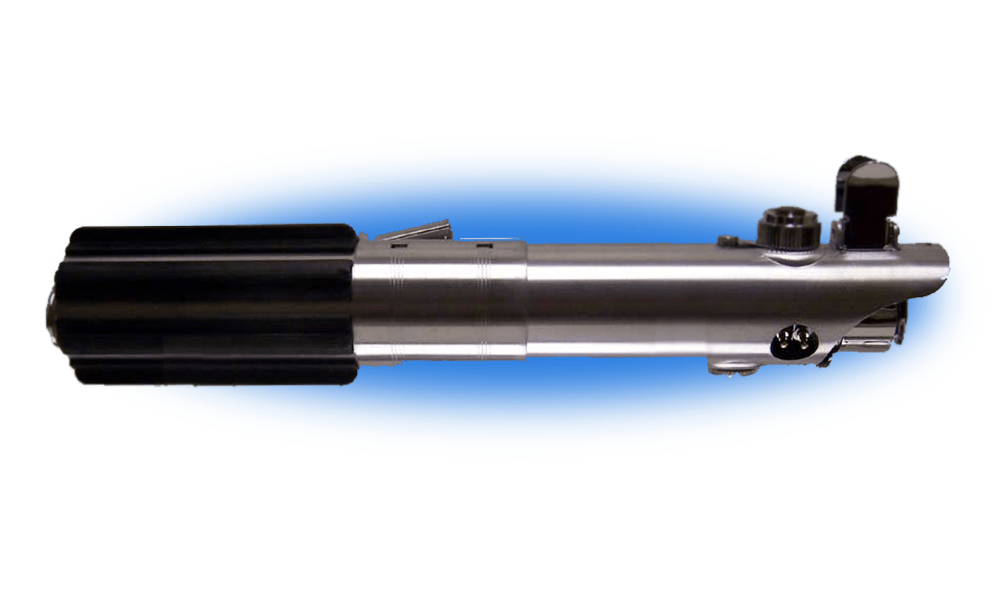
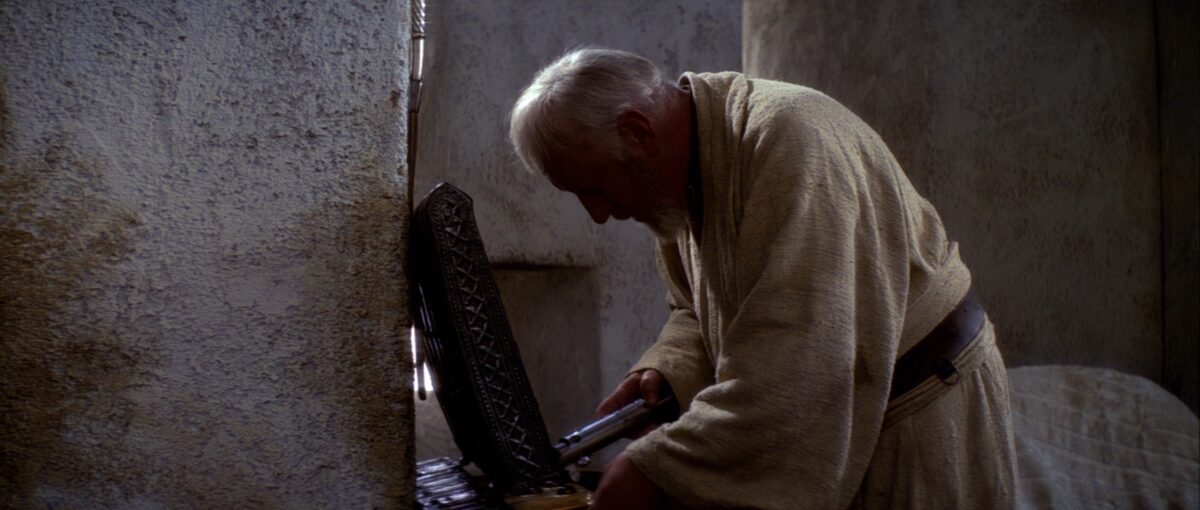
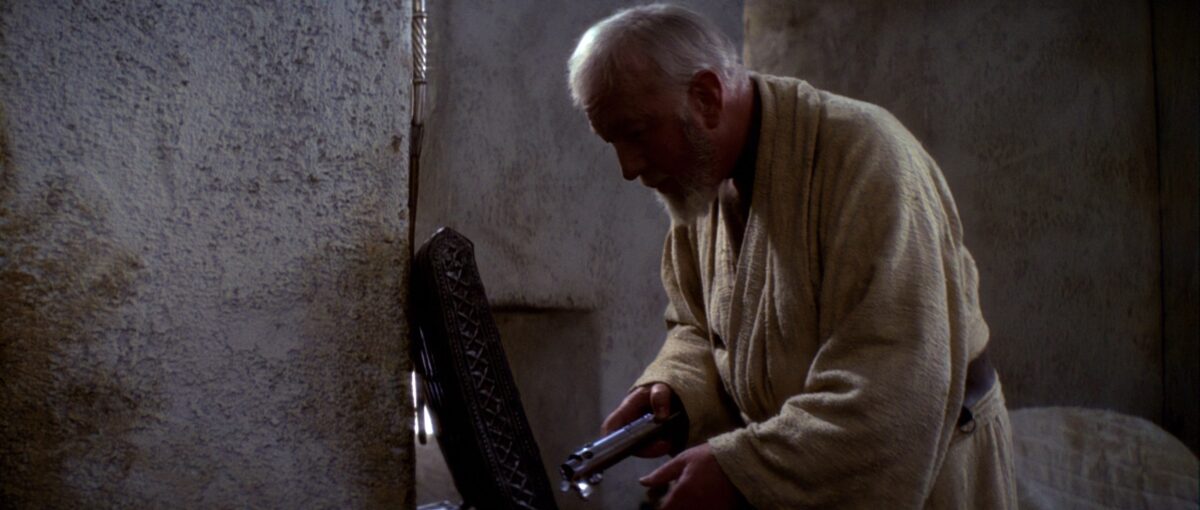
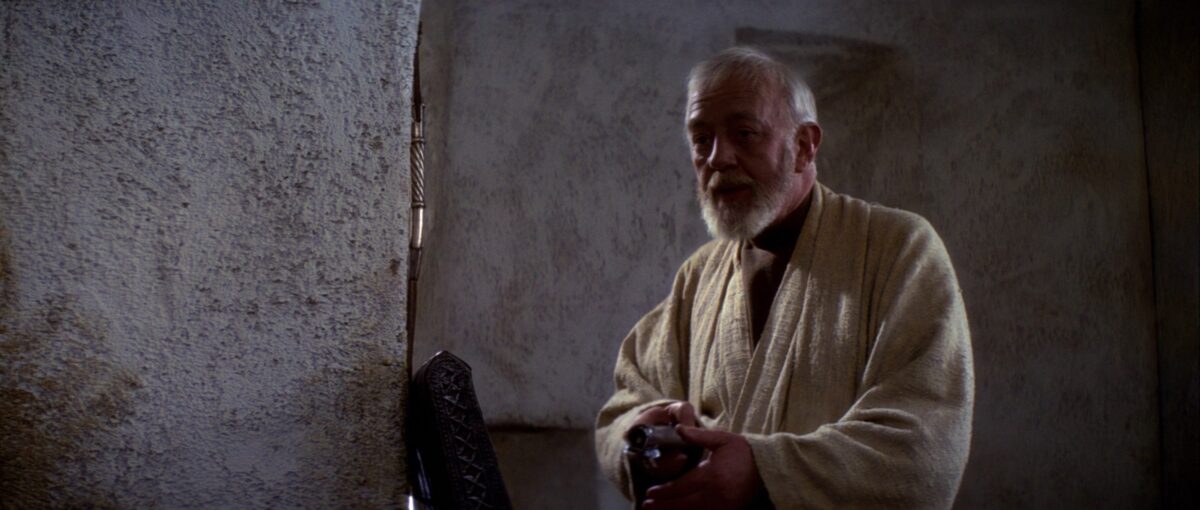
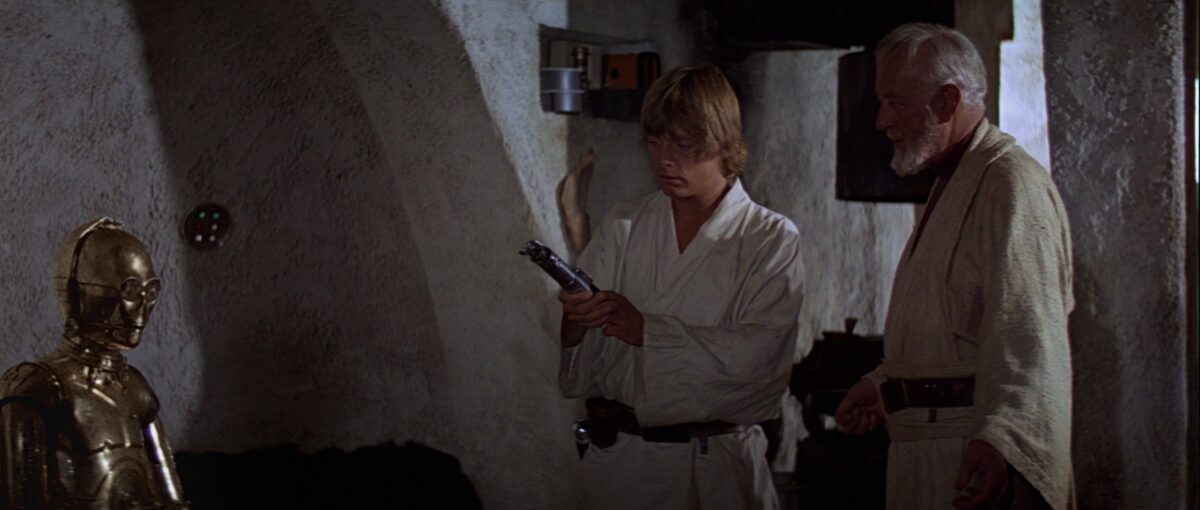
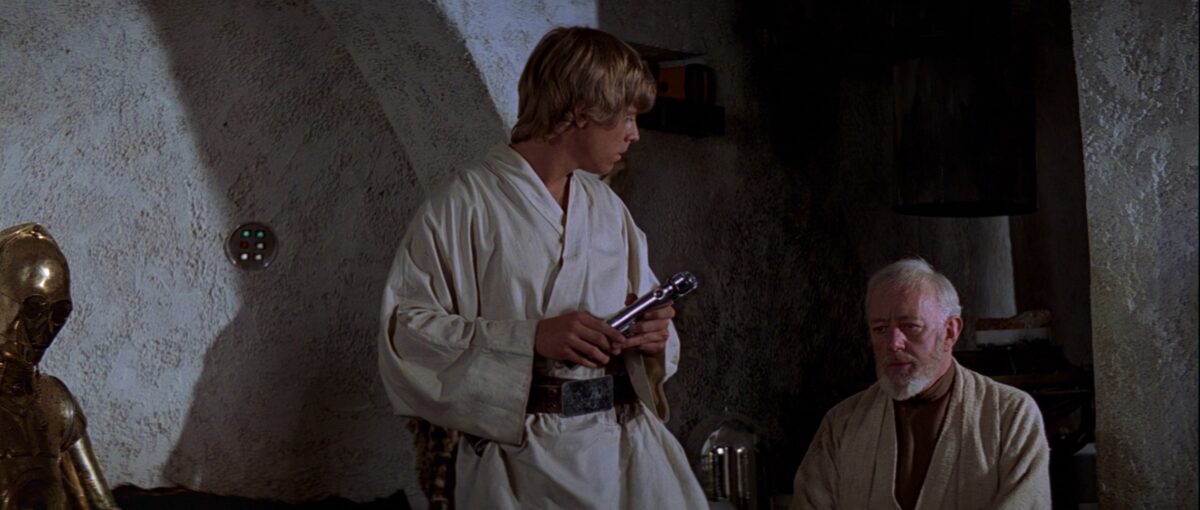
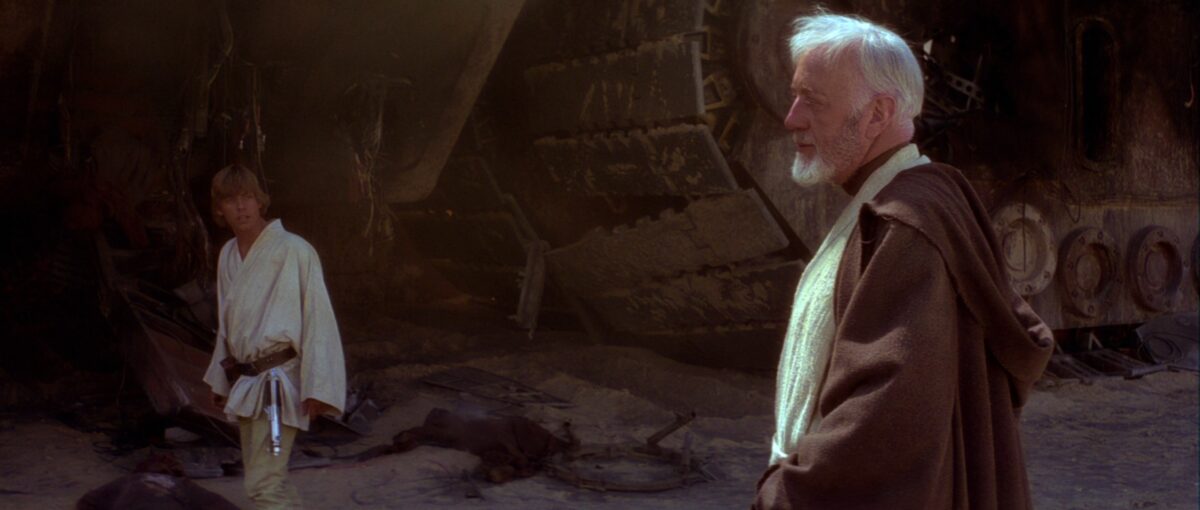
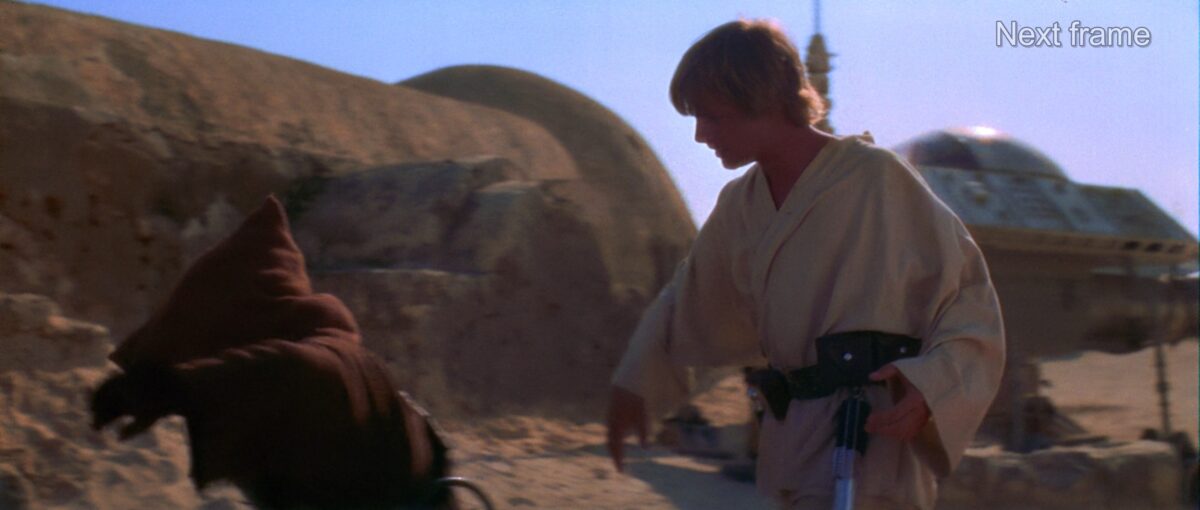
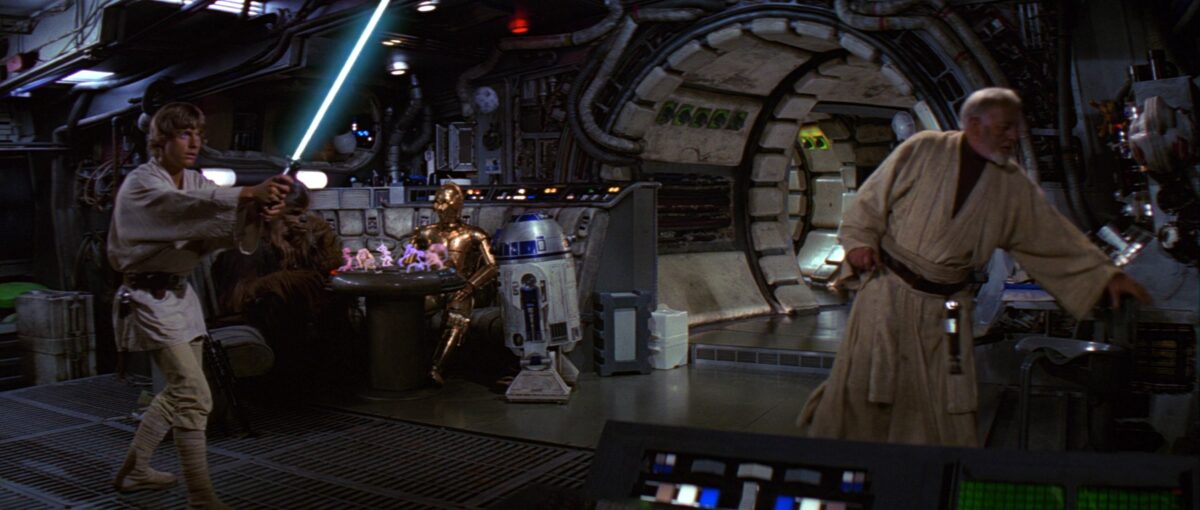
Luke Skywalker’s Episode IV lightsaber is the very first lightsaber ever designed for the Star Wars films, which gives it iconic status. In canon built by Luke’s father Anakin, the hilt spent 10 years in a chest in the desert sands of Tatooine after the duel with Obi-Wan Kenobi, and then another nine years in Obi-Wan “Ben” Kenobi’s hut.
The design is inconsistent in the film. Seen from above, the clamp is actually on the left side, but it also appears on the right. In the later films, including Episode III, the clamp actually points to the right.
Screenshots
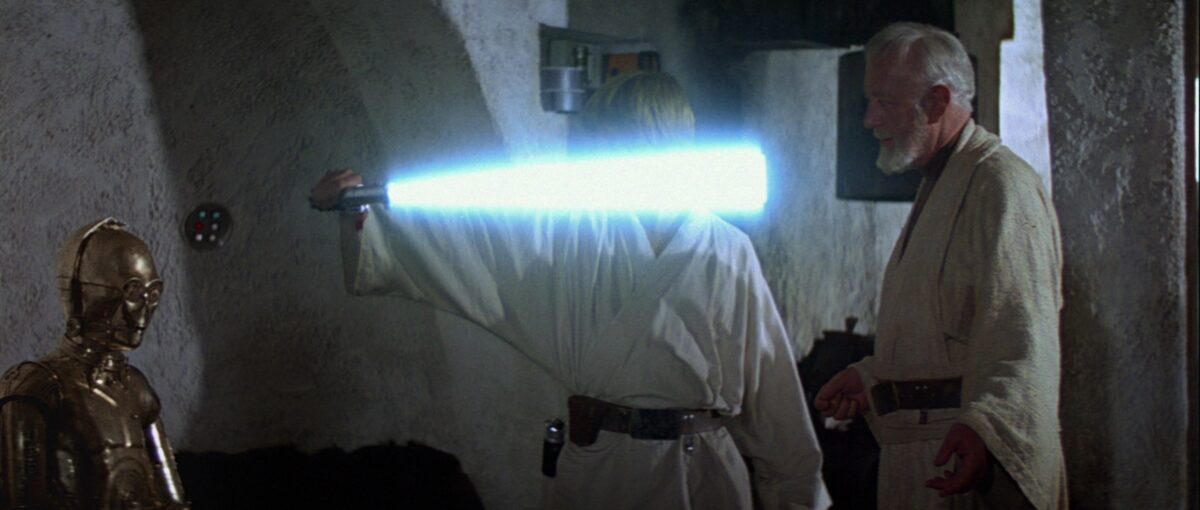
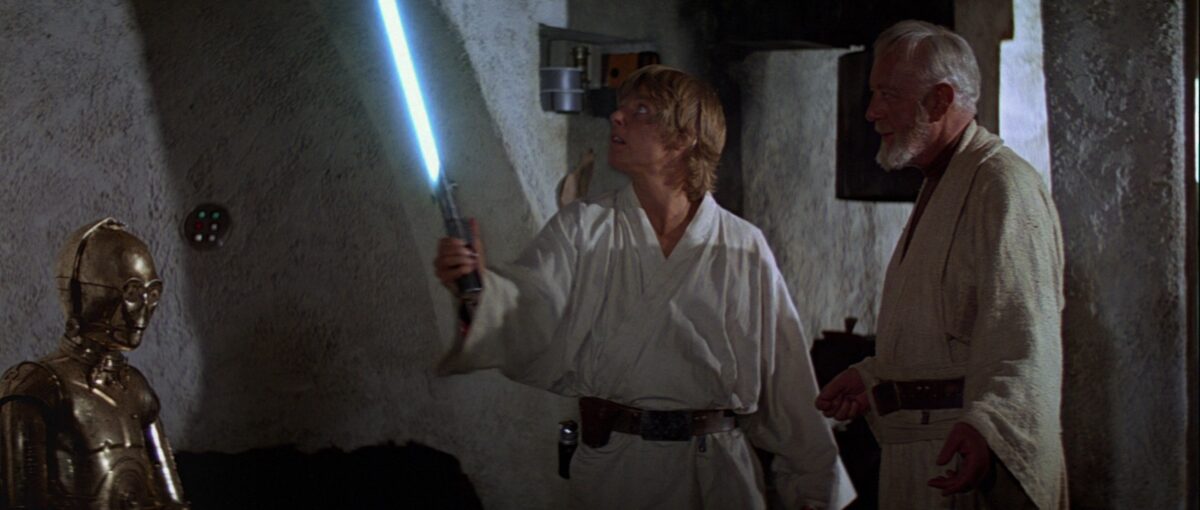
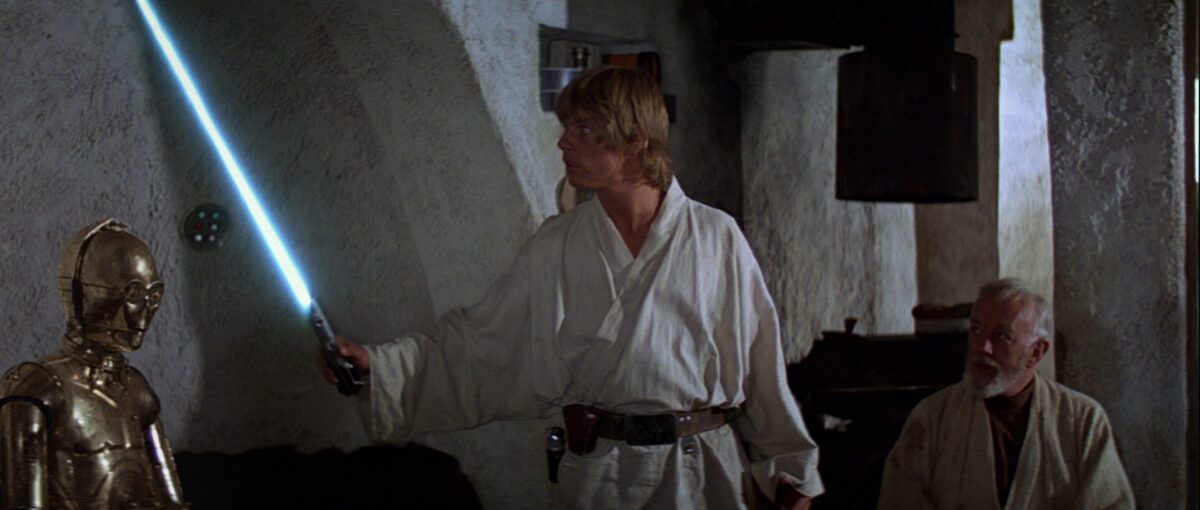
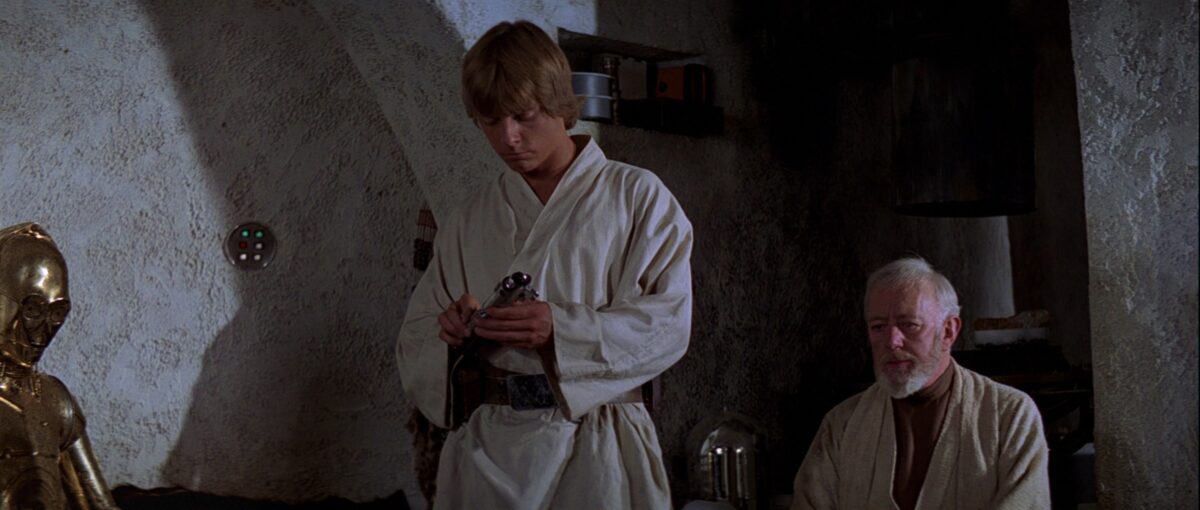







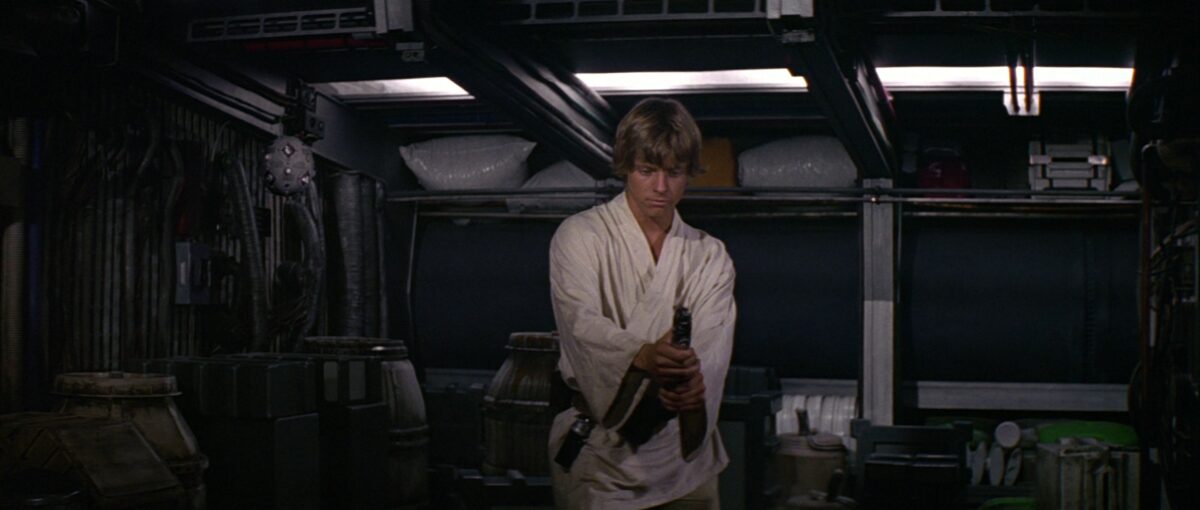
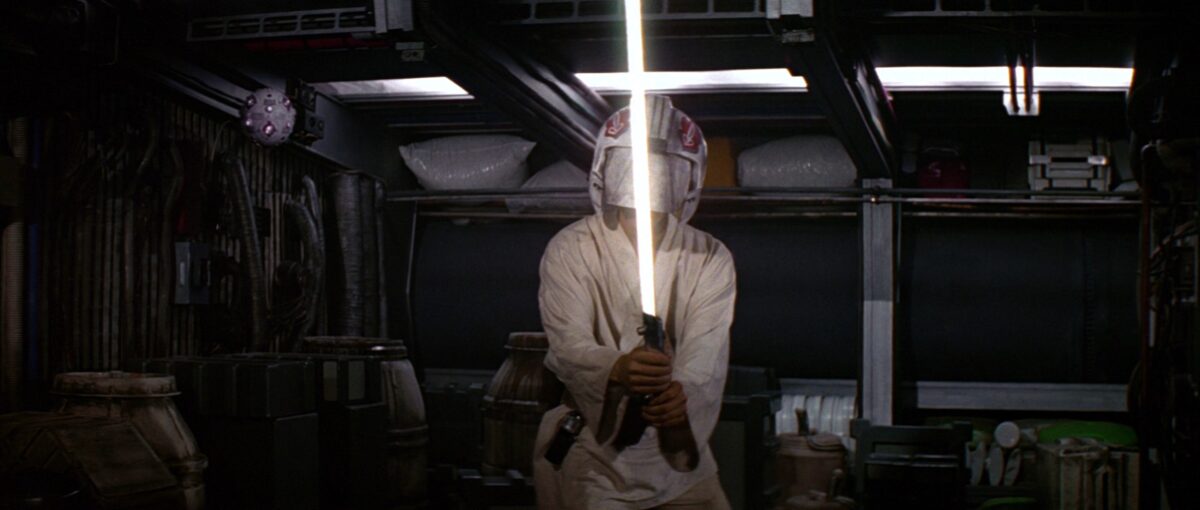
Behind the Scenes

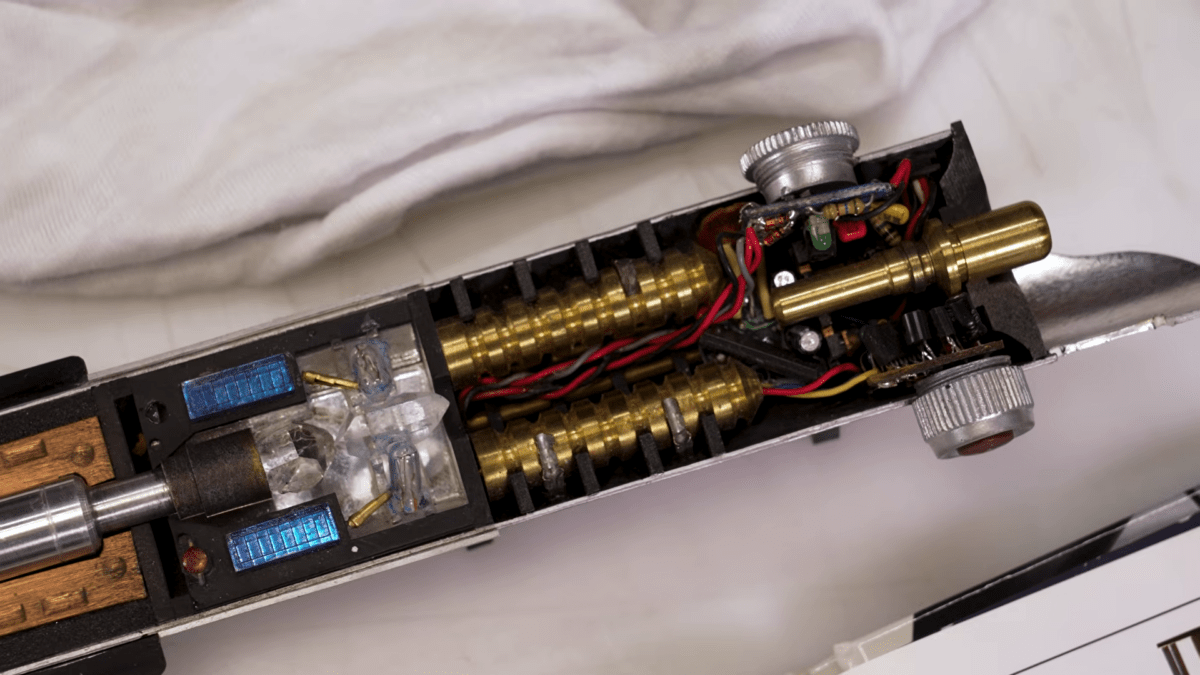
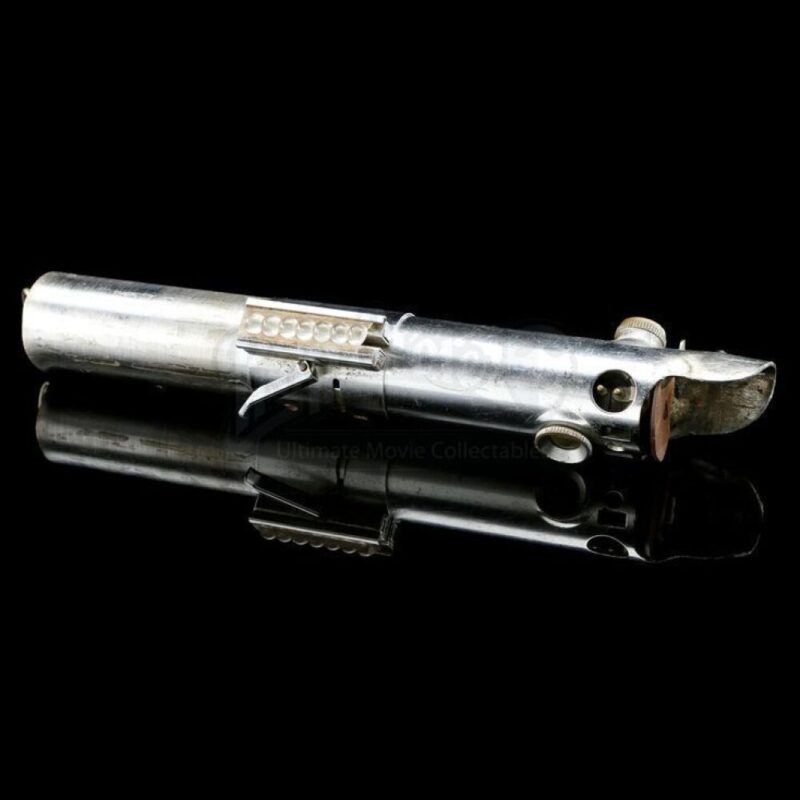
The basic shape of the hilt is a Graflex camera flash handle (“Graflex 3-cell”) from the 1940s; only the large reflector of the flash was removed. The flash handle was attached to the camera at the clamp. For the Episode IV lightsaber, a “bubble strip” was added there, which in turn came from another contemporary device: a calculator. The display of the Texas Instruments Exactra-20 was turned into a lightsaber component.
The grips, or so-called T-tracks, are not made from windshield wiper blades, as fans long assumed, but are part of a guide rail found in kitchen cabinets or other cabinet doors. There is no longer any definitive record of the exact material used for the prop, though.
For scenes with an ignited lightsaber, a version of the hilt with heavily reduced detail was built. Inside the hilt was a motor that spun the blade, which was wrapped in reflective foil. The reflected light then produced a glowing lightsaber in the camera lens.
The prop was designed by Roger Christian, who worked as set decorator on ANH and later as second unit director on TPM.